

BS 9251:2021 – A Simple Guide to Domestic & Residential Sprinkler Systems

System Categories Explained
BS 9251:2021 defines four categories of sprinkler system. These categories reflect the building height, risk profile and resilience required.
Category 1 – Domestic Systems
For single-family homes and small dwellings.
Typical applications:
- Houses
- Bungalows
- Small individual flats
Key features:
- Lowest water demand
- Designed to protect escape routes and key rooms
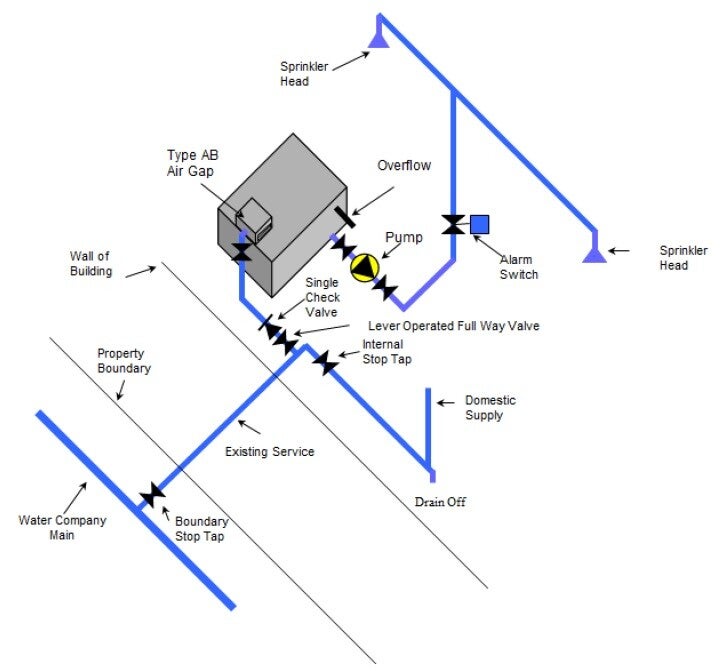
- Usually fed from the mains or a small tank/pump
System Requirements:
- Minimum run time: 10 minutes
- Number of heads for calculation: 1 or 2
- Flow rate: 78-125 litres per minute
- Tank size: 1m³ to 1.5m³

Category 2 – Residential
For low-rise residential buildings up to 4 storeys or 18 m, whichever is lower.
Typical applications:
- Blocks of flats
- HMOs
- Small care homes
- Student accommodation
Key features:
- Higher water demand than Category 1
- Wider coverage requirements
- More robust alarm and monitoring functions
System Requirements:
- Minimum run time: 30 minutes
- Number of heads for calculation: 1 or 2
- Flow rate: 78-150 litres per minute
- Tank size: 3m³ to 4.5m³

Category 3 – Residential
For larger or higher-risk residential buildings, still up to 18 m.
Typical applications:
- Larger care homes
- Residential buildings with vulnerable occupants
- Buildings with more complex layouts
Key features:
- Increased water supply resilience
- More stringent monitoring and fault signalling
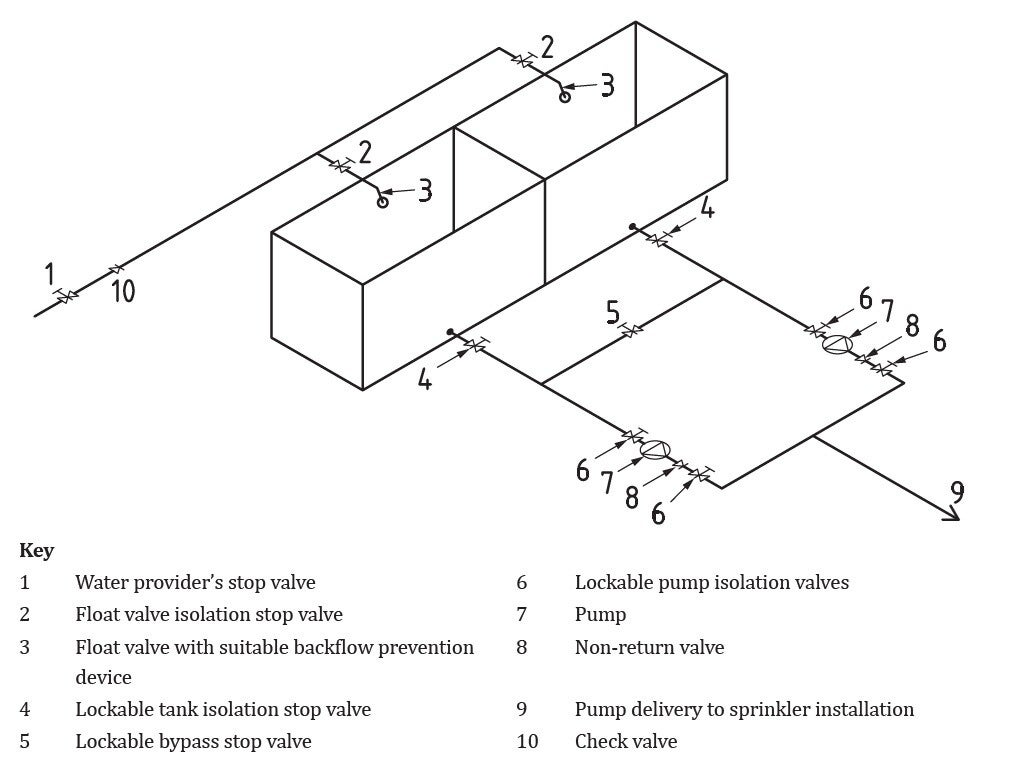
- May require duplicate pumps depending on risk
System Requirements:
- Minimum run time: 30 minutes
- Number of heads for calculation: 2 or 4
- Flow rate: 156-250 litres per minute
- Tank size: 8m³ to 10m³

Category 4 – High-Rise Residential
For buildings over 18 m or with more than 4 storeys.
Typical applications:
- High-rise apartment blocks
- Tall mixed-use residential buildings
Key features:
- Highest level of resilience
- Larger water storage volumes
- Duplicate pumps and enhanced power supplies
- Additional fire service facilities
System Requirements:
- Minimum run time: 60 minutes
- Number of heads for calculation: 2 or 4
- 2 or more half capacity tanks (10m³)
- 2 or more pumps
- Backup Power supply

Why Should You Use BS9251 – Fire Sprinkler Systems?
Fire sprinklers are one of the most reliable ways to protect life in homes, apartments and residential buildings.
BS 9251:2021 is the UK code of practice that sets out how these systems should be designed, installed and maintained.
BS 9251 applies to domestic and residential buildings, including:
- Houses and bungalows
- Flats and apartments
- HMO
- Care homes
- Student accommodation
Installing fire sprinkler systems in residential complexes is a crucial safety measure that reduces the risk to both life and property. Key benefits include:
- Life Safety: Fire sprinkler systems help contain or extinguish fires, giving occupants valuable time to escape.
- Property Protection: Limits damage caused by fire, reducing repair and rebuilding costs.
- Firefighter Assistance: Helps firefighters by limiting fire development, reducing the risks they face during rescue operations.
- Water Efficiency: Reduces water usage for firefighting by upwards of 90%, minimising environmental impact.
- Regulatory Compliance: Ensures buildings meet current safety standards and improves resilience in high-risk scenarios.
- System Modification Support: Aids in system extensions, repairs, or modifications to maintain compliance.
What’s Changed Since the Last Update?
BS 9251:2021 has replaced BS 9251:2014. The latest revision has some key changes:
- New Category 4: For taller residential buildings (above 18m) and high-risk scenarios.
- Increased water supply requirements for taller buildings and high-risk premises.
- Expanded guidance and protection for non-residential areas within protected buildings.
- Enhanced fire service interaction for better coordination during emergencies.
Additional Areas Covered by BS9251:2021
- Certain non-residential spaces within residential buildings are also covered under BS9251:2021, including:
- Car parking within or beneath flats / domestic garages
- Bin stores and residents’ storage sheds
- Plant rooms (e.g., PTSN / CCTV / electrical rooms)
- Laundry/utility rooms (domestic or institutional, such as in care homes)
- Kitchens (domestic and self-catering, including student accommodation and residential care)
- Foyer/reception areas and small office spaces (e.g., concierge or site management areas)
Disclaimer:
The information on this page is intended as a simplified overview of BS 9251:2021. It should not be relied upon as a substitute for project‑specific design, engineering or regulatory advice. All sprinkler systems must be evaluated on a case‑by‑case basis with reference to the approved fire strategy, building layout, water supply characteristics and other relevant factors.
Safety Starts with GFS Sprinklers
If you have any questions or need assistance with your sprinkler system get in touch with our team.