

Water Supply Types
A sprinkler system is only as reliable as its water supply. BS 9251 sets out several compliant options depending on the category and building constraints. BS9251 specifies a minimum water pressure and flow rate that the sprinkler system must achieve to function correctly during a fire event. Inadequate water supply can compromise the system's effectiveness. Installers often conduct tests during the design phase to ensure the existing supply is sufficient. If not, they might recommend options such as installing a storage tank or pump to meet the required specifications.
Option A: Direct Mains Supply
A connection straight from the water main.
Pros:
- Simple and cost-effective
- No tank or pump required
Cons:
- Only suitable where the water undertaker confirms adequate flow and pressure
Typically used in:
- Category 1
- Category 2 (subject to proving performance)

Option B: Dedicated Pump and Stored Water (Pump & Tank System)
A dedicated tank feeding a fire pump.
Pros:
- Most reliable and widely accepted
- Works regardless of mains pressure
- Required for taller or higher-risk buildings
Cons:
- Requires space for tank and pump
- Higher installation cost
Typically used in:
- Category 1 & 2 (where mains is insufficient)
- Category 3
- Category 4 (with enhanced resilience)
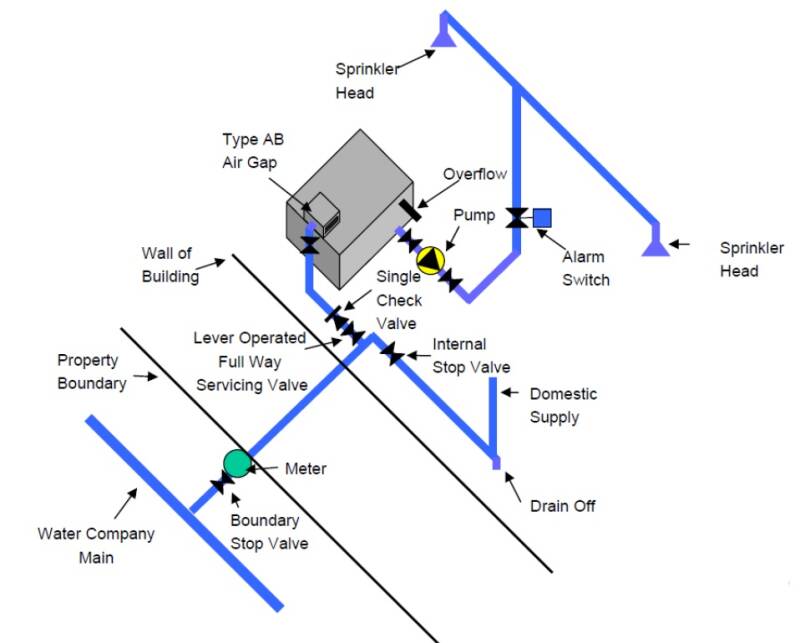
Option C: Shared Water Supply
A shared tank/pump arrangement serving both sprinklers and domestic water.
Pros:
- Saves space
- Reduces installation cost
Cons:
- Must be designed so sprinkler demand always takes priority
- Requires a Priority Demand Valve (PDV)
Typically used in:
- Multi-storey apartment buildings
- Mixed-use developments

Option D: Enhanced Water Supplies
For high-rise or high-risk buildings.
Features may include:
- Duplicate pumps
- Secondary power supplies
- Larger tank volumes
- Additional monitoring
Typically used in:
- Category 4
- Complex Category 3 buildings

Disclaimer:
The information on this page is intended as a simplified overview of BS 9251:2021. It should not be relied upon as a substitute for project‑specific design, engineering or regulatory advice. All sprinkler systems must be evaluated on a case‑by‑case basis with reference to the approved fire strategy, building layout, water supply characteristics and other relevant factors.
Safety Starts with GFS Sprinklers
If you have any questions or need assistance with your sprinkler system get in touch with our team.